
Updated: 14 Aug 2026
Originally Published: 26 Jan 2021
Data sanitization is a crucial aspect of information security that should be familiar to all organizations. So why are so many companies still not taking the appropriate measures to permanently remove data from their devices? One reason is the variety of myths surrounding data sanitization. What does data sanitization really mean? What happens when attempts to remove sensitive information is done the wrong way? Companies are easily at risk of not complying with GDPR and other data protection regulations.
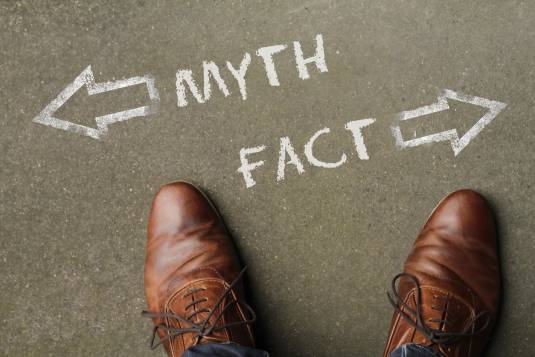
To make sure you won’t be fooled by data sanitization myths, we will share 5 of the most common ones. You will likely be familiar with at least at least 1 or 2 of these myths, but it’s never too late to fix the situation by using data wiping software.
What Is Data Sanitization?
Data sanitization is the process of permanently removing or destroying the data stored on a device. After sanitizing the storage media, data will be unrecoverable, even with the assistance of advanced forensic tools. Beyond removing the files and folders, the sanitization process will permanently remove all Data Remanence, or residual traces of the data.
Data Sanitization Myth 1:
Deleting Files Is Enough
The most common piece of misinformation surrounding data sanitization may be the belief that ‘deleting’ files by normal means is enough to make them disappear for good. When we say ‘deleting’ files by normal means, we refer to the process of moving files to your Recycle Bin and then emptying it, or simply holding Shift + Del. Although emptying your Recycle Bin seems to make files vanish, this really isn’t the case.
In reality, files that are deleted in these ways remain on your computer and can be retrieved with common file recovery software. This problem exists because of Data Remanence.
Data Sanitization Myth 2:
Formatting Deletes Data Permanently
Formatting a computer’s hard drive is often performed when people want to remove all the information. Unfortunately, formatting a hard drive does not permanently delete its contents. Instead, formatting allows you to perform a fresh installation of an operating system by unlinking all the files in the hard drive’s file system.
So, while formatting your computer makes it seem like your data has been removed, the information will still be stored on your system and can be recovered with file recovery software.
Data Sanitization Myth 3:
Degaussing Works for All Devices
Degaussing is a method of physically destroying data by using a powerful magnetic field that leaves data in an unrecoverable state. It’s true that degaussing can be an effective way of permanently destroying your data, but it doesn’t work on all devices.
In fact, degaussing only works on magnetic storage devices like hard disk drives (HDDs). This is a problem if you want to permanently remove data from a solid-state drive (SSD) – degaussing doesn’t work on SSD as data is not stored magnetically. Instead, SSDs use flash memory chips. Degaussing doesn’t work for optical storage devices either.
You should also keep in mind that degaussing modern HDDs can be problematic, as degaussers may have insufficient strength to counteract newer types of magnetic storage media.
Data Sanitization Myth 4:
Physical Destruction Is Always the Best Choice
If your organization has a hard drive that’s no longer needed, a quick Google search will tell you there’s 2 ways of dealing with it securely — wiping its contents with software or physically destroying the drive. In this case, it’s true that both methods can be effective, but that certainly doesn’t mean physical destruction is the best option.
First of all, when you destroy an old hard drive with a hammer – or your preferred tool to smash or burn – you are creating harmful electronic waste that may not agree with your company’s sustainability policy. Taking the path of destruction also rules out the possibility of keeping the hard drive as a handy backup or donating it to someone in your local community. In addition, burning or smashing your drive destroys the storage media, not the data itself.
Data Sanitization Myth 5
Data Wiping Is Too Expensive
Some organizations tend to think that securely wiping their vulnerable information is not a worthy investment. While it’s true that effective data wiping is a paid solution, the cost of the software and additional support is very little when compared to the risks of not having reliable data sanitization measures in place.
By failing to securely remove sensitive information, organizations are risking more than their reputation. They face the possibility of data breaches, which can result in paying huge fines for not complying with regulations like GDPR. If anything’s too expensive, it may well be the foolish decision to not invest in data sanitization software.
Now that we’ve separated fact from fiction, there should be no remaining doubts about the importance of data sanitization and how to do it properly. If you want to learn more about securely wiping hard drives clean, check out our ultimate guide and review our 5-step checklist for hardware decommissioning. To get started with Jetico’s secure data wiping solution, begin your free trial of BCWipe today.
Ready to learn the 5 most common cybersecurity myths?
Read our blog: 5 Cybersecurity Myths & How to Overcome Them
Frequently Asked Questions (FAQs)
Deleting or formatting removes only the file references while leaving the underlying data intact and easy to recover with common tools. Data sanitization goes further by permanently erasing files and all data remanence. This prevents recovery even with advanced forensic techniques.
Physical destruction often damages the hardware but does not guarantee that all data has been erased. It also creates electronic waste and eliminates any opportunity for reuse or donation. In many cases, secure software wiping provides the same level of protection in a cleaner, more cost-effective way.
No. Degaussing works only on magnetic media such as traditional HDDs. It does not work on SSDs, USB sticks or other flash-based devices because they do not store data magnetically. For modern drives, a software-based wiping method is required.
Compliance requires proving that personal data has been irreversibly removed. This means using a trusted wiping solution that eliminates data remanence across file slack, directory slack, logs and temporary system files. Jetico’s data discovery and classification capabilities help organizations locate where personal data resides so every relevant file is identified and securely erased. For documentation and audits, BCWipe also supports detailed wiping reports and certificates of erasure to demonstrate that sanitization was completed properly.
BCWipe permanently erases files, free space and residual traces beyond forensic recovery, making it useful for active systems. For complete drive erasure or device retirement, BCWipe Total WipeOut wipes entire drives and generates audit-ready reports. Combined with Jetico’s discovery and classification features, teams can quickly locate sensitive data and verify that all required information has been properly sanitized.
Related Articles
Hardware Decommissioning Process: A 5-Step Checklist
The Ultimate Guide to Deleting Files Permanently
DoD 5220.22-M Explained – Data Erasure Standards
NIST SP 800-88 Guidelines for Media Sanitization Explained
IEEE 2883-2022 Standard for Sanitizing Storage
IRS Publication 4812 & How to Comply with Wiping Standards
How to Delete Files on SSD
How to Wipe an NVMe Drive
How to Wipe an SSD on Windows 11 & 10
How to Wipe a Hard Drive on a Dead Computer